
Stop Watching, Start Doing: True Mastery & Learning

Shatter the Illusion of Knowing: Why Just Watching Isn't Enough – You Must Do
Have you ever watched a gymnast stick a perfect landing, a chef create a complex dish with apparent ease, a musician play an intricate piece flawlessly, or even a friend effortlessly parallel park, and thought, "That looks easy, I get it!"? Or perhaps, after seeing the solution to a tricky math problem or a clever plot twist in a movie, you've muttered, "Oh, I knew that!"?
That Misleading Inner Voice: "I Understand"
This seductive whisper of understanding, without the sweat of practice, is one of the most common and deceptive pitfalls on the path to true mastery, whether in academics, arts, or any skill. It's like watching that master chef conjure a culinary masterpiece and confidently believing you could replicate it, only to find your kitchen transformed into a scene of delicious chaos. The chasm between passively observing and actively executing is vast, and mistaking the former for the latter can critically stall your progress.
Let's delve deeper into this "illusion of knowing," exploring through analogies, personal stories, and practical examples why active engagement is not just beneficial, but absolutely essential.
Balancing Act: What Bicycles Teach Us About Learning
Consider the simple act of learning to ride a bicycle. You can watch cyclists glide by for hours, understanding the mechanics – balance, pedal, steer. It seems straightforward. Yet, the instant you hop on, that intellectual grasp vaporizes. Suddenly, you're a symphony of wobbles, a testament to the stark difference between knowing about and knowing how. True proficiency, that effortless glide, only emerges from the messy, hands-on process: the trial, the error, the scraped knees, and the eventual, triumphant click of your brain and body working in unison.
From the Fairway to the Classroom: My Own Illusions Shattered
This isn't just a hypothetical scenario; I've lived it, more than once.
Illusions on the Fairway: My Golfing Misadventure
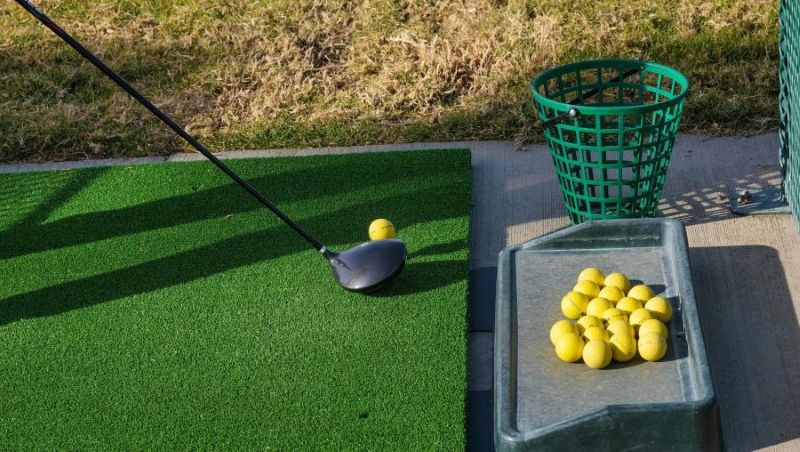
My early success in swimming, learned young with excellent coaching, perhaps gave me a false sense of innate skill. So, when I took up golf at 37, I approached it with a breezy confidence: "How hard can a golf swing be?" I diligently practiced at the driving ranges in Bangkok, often punctuating my sessions with delightful Thai dishes like Pad Thai, Tom Yum Goong. I convinced myself that my range performance would translate directly to the course. The D-day arrived, and reality hit harder than any well-struck drive. My carefully practiced swings consistently sent balls into the most inconvenient water hazards and deepest sand bunkers. It was a costly, humbling lesson: passive observation, even with seemingly active practice swings without real-world pressure, doesn't cut it.
Conquering Math: From Passive Observation to Active Problem-Solving
This principle of active engagement became even clearer during my school days, particularly with a subject that once filled me with dread: Mathematics. I’d passively watch my teacher solve problems or explain theorems, nodding along and thinking I'd absorbed it all. Careless mistakes and a lack of deep practice led to repeated debacles in quarterly exams. The illusion was strong, but my results were weak. It was only when I decided to truly "walk the talk" – to do the maths, to wrestle with problems, to meticulously work out solutions – that things changed. The frustration of the struggle was immense, but the elation of cracking a problem and finding the correct answer, that "rainbow feeling," was even greater. Years later, this active approach helped me secure a State Government Merit Scholarship in Class X.
The "muscle memory" of the brain, much like our physical muscles, needs rigorous, active training.
UPSC Civil Services: My Personal Test of Endurance
The need for active, real-condition practice isn't limited to acquiring new knowledge or skills; it's equally critical for demonstrating what you know under demanding circumstances. I learned this the hard way during one of the toughest challenges of my life: the Indian UPSC Civil Services Main Examination. After two unsuccessful attempts at the preliminary level, I finally reached the Main exam stage in my third try. Balancing my preparation with my role as a Scientist-Engineer at ISRO, India's premier space agency, demanded innovative study methods, like recording notes onto cassette tapes for repeated listening. I felt intellectually prepared.
However, I overlooked a crucial aspect of readiness: physical endurance for the exam itself. Each paper in the Main exam is a grueling three hours long. To my profound regret, I never once practiced writing for the full three-hour duration under simulated exam conditions. The consequence of this oversight struck me mercilessly in the examination hall. About halfway through, with a critical final 60 minutes remaining, my hand began to ache intensely. My pen felt like lead, often freezing, refusing to translate my thoughts onto paper at the required speed. I struggled immensely to complete the papers, the ticking clock amplifying my distress. By the time the harsh realization dawned – that I needed to have practiced continuous writing for four hours or more to comfortably handle a three-hour exam – it was too late to significantly change my preparation. When the mark list arrived, the cost of this illusion of preparedness was starkly evident in the lost marks. My intellectual knowledge was there, but my physical capacity to express it fully under exam pressure was untested and, ultimately, insufficient. It was a powerful lesson that knowing the material is only half the battle; being able to perform under true conditions is the other, equally vital, half.
The Echo Across Skills: Language, Music, and More
This imperative for active doing echoes across countless disciplines.
- The Fluency Factor: Speaking vs. Knowing a Language: Think about learning a new language. I have a friend with an MA in Arts who, despite a strong grasp of grammar, struggles with fluent English conversation. Conversely, another friend's daughter, with limited formal grammatical knowledge, speaks with amazing fluency. The difference? The latter practices speaking constantly, unafraid of mistakes. You might listen to a native speaker, recognizing vocabulary and sentence structures, and think, "I know those words!" But when it's your turn, forming coherent sentences in real-time becomes a monumental task. Passive listening is a starting point; active speaking, with all its imperfections, is the pathway to fluency.
- From Bathroom Ballads to Stage Applause: My Singing Journey: My own foray into public singing offers another poignant example. For years, I was a dedicated bathroom singer, my voice safely confined. But as Course Director at an International Training Centre, my students cajoled me into performing. I chose Westlife's "My Love," a song I adored and, in my naivety, deemed "easy." Stepping onto the auditorium stage, karaoke microphone in hand, I was ambushed by the song's rhythmic complexity, its soaring high notes, and the subtle dynamics of its crescendo. My voice faltered, struggling to even approach the iconic "where the skies are blue..." line. It was a public lesson in the illusion of knowing. But I didn't give up. I practiced relentlessly, my throat aching. I tried honey, warm water, and Ayurvedic remedies to strengthen my vocal chords. At the next course's valedictory ceremony, I sang "My Love" again. This time, the applause was thunderous, the audience on their feet. The difference was sheer, focused, active practice.
- The Aspiring Musician's Reality Check: Calloused Fingers and Clear Notes: I have a friend who loved music and watched countless guitar tutorials online. He could follow along with the instructor's finger placements and understand the chords being played. He often thought, "I know that chord! I saw how they played it. I could play that song!" However, when my friend finally picked up a guitar, he struggled to coordinate their fingers, produce a clear sound, and transition smoothly between chords. He realized that watching wasn't the same as doing. It took dedicated practice, calloused fingertips, and the frustration of initial failures to truly learn to play. Similarly, in academic subjects, the "callouses" of your brain are built through the effort of actively engaging with the material and working through challenges yourself.
- Beyond Shadow Boxing: The Necessity of True Engagement: Think of a boxer shadow boxing. They might mimic the movements of a real fight, visualizing punches and dodges. While it's a form of practice, it's no substitute for sparring with a real opponent. The unpredictable nature of a real fight, the need to react and adapt, and the physical impact are entirely different. Similarly, passively reviewing material or looking at solved examples is like shadow boxing with knowledge. You might feel like you're engaging, but you're not truly testing your ability to recall and apply the information independently when faced with a new problem or a different context.
In essence, the journey to true knowing is paved not with passive observation, but with active, often challenging, participation. So, the next time you find yourself thinking, "I get it!" after merely watching, remember to step into the arena and do.
Beyond Personal Anecdotes: Universal Truths in Learning
These personal experiences are mirrored in more general learning analogies:
- The "Following the Recipe" Fallacy: As mentioned with the chef, simply watching a cooking show and understanding the steps doesn't mean your dish will remotely resemble the professional's. You might misinterpret a nuance, mismeasure an ingredient, or lack the "feel" for a technique. Hands-on experience, tasting, adjusting, and even failing, are the true teachers.
- The Story of the Aspiring Musician: Many watch countless online tutorials, believing they "know" the chords and songs. Yet, when they finally pick up the instrument, their fingers fumble, the sound is jarring, and transitions are clumsy. The "callouses" on their fingertips, earned through persistent, often frustrating practice, are symbolic of the mental callouses needed for academic learning – built through the effort of actively engaging and working through challenges.
- The "Shadow Boxer" of Knowledge: A boxer can shadow box for hours, perfecting form and visualizing an opponent. While beneficial, it's no substitute for sparring with a live partner who is unpredictable and pushes back. Similarly, passively reviewing notes or looking at solved examples is like shadow boxing. You feel engaged, but you're not truly testing your ability to recall, apply, and adapt knowledge under pressure or in novel situations.
How to Shatter the Illusion and Embrace Active Learning: Your Toolkit for True Mastery
Recognizing this illusion is the first step. The next is to actively dismantle it. So, how do we break free from this comfortable but ultimately misleading sense of knowing and step into the realm of genuine competence?
- The "Teach It Back" Test: After learning a concept, try explaining it to someone else—a friend, family member, or even your reflection—in your own words, without looking at your notes. This forces active retrieval and processing, instantly highlighting gaps.
- The "Blank Page Challenge": When studying, attempt to solve problems, derive formulas, or write summaries from memory on a blank page. This is a direct litmus test of your recall and application abilities.
- The "Vary the Problem" Approach: Don't just memorize solutions to specific examples. Seek out or create slight variations of problems. This compels you to understand underlying principles rather than just mimicking steps.
- Embrace the Struggle: Mistakes are not failures; they are vital data points in the learning process. The effort expended in overcoming challenges is what forges deep, lasting understanding.
- Active Note-Taking and Summarizing: Move beyond mere transcription. Process information as you receive it, connect it to prior knowledge, and summarize it in your unique voice and structure.
- Practice, Practice, Practice (and then Practice Some More!): Like any skill, academic mastery is built on the bedrock of consistent, deliberate practice. Work through countless examples, solve problems repeatedly, and actively apply the concepts in diverse contexts.
By consciously shifting from passive observation to active engagement, you can shatter the "I knew that!" illusion. It's in the doing, the struggling, and the persevering that true understanding is forged. This active approach not only builds a rock-solid foundation for academic and personal success but also cultivates genuine confidence born from proven ability, not just perceived knowledge.
Don't just watch from the sidelines; step into the arena and truly learn.